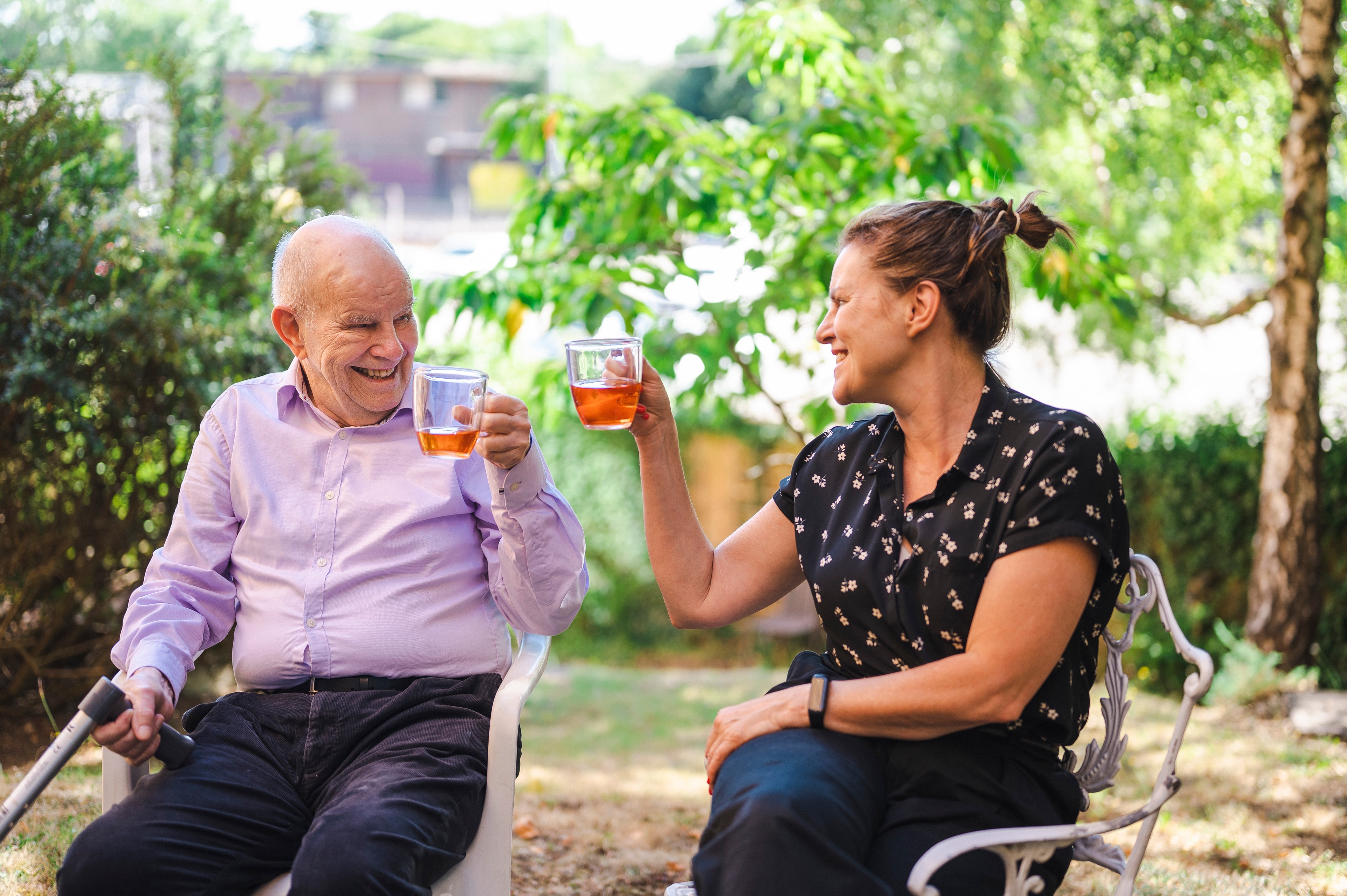
How to remain at home when your home is no longer your castle
We all know the phrase 'An English man's home is his castle'. But what happens when a much-loved home of more than 30 or 40 years starts to become burdensome, impractical and potentially unsafe? Susan shares her top five tips for staying in control.

We all know the phrase 'An English man's home is his castle'. It resonates strongly with those in later life for whom this was particularly true; a generation made of breadwinners and home makers, whose homes were (and still are) a strong part of their identity and their status.
But what happens when a home is no longer a castle? What happens when a much-loved home of more than 30 or 40 years starts to become burdensome, impractical and potentially unsafe? What then?
Well, for the most part, nothing. In the UK 35% of all homes are owned by someone over the age of 65, and 41% of these homeowners have owned their home for at least 30 years - homes purchased for a very different chapter of life. It's anticipated that the number of 'older homeowners' will grow by 47% by 2043.
And whilst many of these homeowners are thriving and living well, there are many who are not. Perhaps their home is now too big, or becoming difficult to maintain; perhaps its layout or location is not conducive to remaining independent and socially active in later life; or perhaps its value forms a significant portion of the owner's overall estate, money that could be spent to improve their day-to-day life or shared with loved ones.
Why do many older homeowners stay in homes that no longer serve them?
This very question is one that I often ponder - with curiosity, not judgement - and that led to the first version of our Future Planning Service at Turners Oak.
Through research and conversations - both professional and personal - I began to understand just how unique moves in later life are; financially, practically and - in most cases, most significantly - emotionally. Our homes are part of our identity, especially when we have lived in them for the longest chapter of our lives. Homes where families have been raised; where memories and keepsakes reside in every room; where loved ones who may no longer be with us feel like they're still with us.
Leaving a much-loved home can feel like leaving behind who we are. Often at a time of multiple losses in life - perhaps the loss of a loved one, or the loss of our own independence - and avoiding loss is a much stronger driver than the potential to gain something.
As a client once said to me: 'these moves aren't logical. If they were, everyone would be making them.'
So then what?
Although Turners Oak exists to support older homeowners and their families to move home in later life, I'm also a big advocate for ageing in place and remaining in your home. I know all too well that, with the right support from domiciliary care companies, companion companies, social groups and technology, these homes can be made castles once again.
My biggest piece of advice? Make informed decisions, proactively, that are right for you. And have a Plan A, Plan B and Plan C.
Whenever research is conducted with those in later life about their priorities two of the biggest answers are always (1) to remain independent and (2) to remain in control. It's my belief that remaining independent and in control means making informed decisions that take into account individual circumstances and preferences, and the potential for things to change - because there is a likelihood that they will.
The reality is that 40% of moves in later life aren't planned, which means they are happening at a time of crisis. This inevitably leads to a loss of control, choice and agency.
Top five tips for those that wish to stay in their current home whilst also remaining in control
1. Don't bury your head in the sand
Everything is OK. Until it isn't. You or your loved one may be living well at home at the moment and that's the best time to consider future options - when there's no time pressure and no crisis. Remaining in control and independent means making informed choices. Explore your options and take time to reflect on them.
2. Discuss your wishes, why they are important, and what the implications of those wishes might be for others
We often hear children of loved ones saying 'I promised mum I wouldn't put her in a care home' or 'dad doesn't want to waste his money on carers'. What the family doesn't talk about is the implications of these wishes. Who does the responsibility for providing care then fall to? Was that the intention? Is it reasonable? What assumptions are being made?
These conversations can be uncomfortable but they are vital if your wishes have implications for loved ones - which may be unintended and are only discovered when you talk about them.
3. Getting support leads to remaining independent
This can feel like a real paradox for people. Often the idea of getting support feels like a loss of independence, when in reality, getting some practical support with day-to-day tasks, using mobility aids to move around safely, or using technology in the home actually leads to remaining independent as your needs change.
4. Get your 'house in order'
Even if you or your loved one are intending to 'go out in a box' it's worth getting your house in order. For example, if the house hasn't been sold for over 40 years it may not be registered with the Land Registry - that's not a problem but it can delay a sale if your circumstances change.
We are also huge advocates for Lasting Powers of Attorney. Whilst it can feel like giving up control, the reality is that you are actually taking charge of who has authority to make decisions with and for you, what those decisions are, how you would like them to make them, and when they can make them.
5. Write down your Plan A, Plan B and Plan C
Often we have thoughts going around in our heads that never come to a conclusion and that we don't share with others. The act of writing something down brings it to life and allows you to reflect on it and share it.
Write down your Plan A and, importantly, why this is your Plan A. Then write down your Plan B - basically what you would like to happen if your Plan A can't be realised and in what circumstances. Finally write down your Plan C - if all else fails, then what?
We often find that when we see our thoughts written down we can begin to gain clarity on our priorities, concerns and fears; and even begin to challenge them.
Bonus tip: put yourself first!
At Turners Oak our purpose is to support older homeowners to thrive in later life, whatever that might look like. We think it's really important you put yourself first. Often we see older homeowners wanting to prioritise others - such as preserving wealth for their children, even when their children would be much happier if they put themselves first and lived well in their current and future chapters.
Do remember this is your life, your home and your next chapter, and you deserve to thrive in it.
As always I value hearing your thoughts and feedback. You're always welcome to get in touch.
Susan, Founder of Turners Oak